Pond Dredging in Action Near Raymond Nebraska
Ponds fill in over time. It happens slowly - sediment builds up year after year from runoff, decaying organic matter, and general accumulation - until one day the water looks shallow, murky, and just not right. That's exactly what we were dealing with at this pond near Raymond, Nebraska.
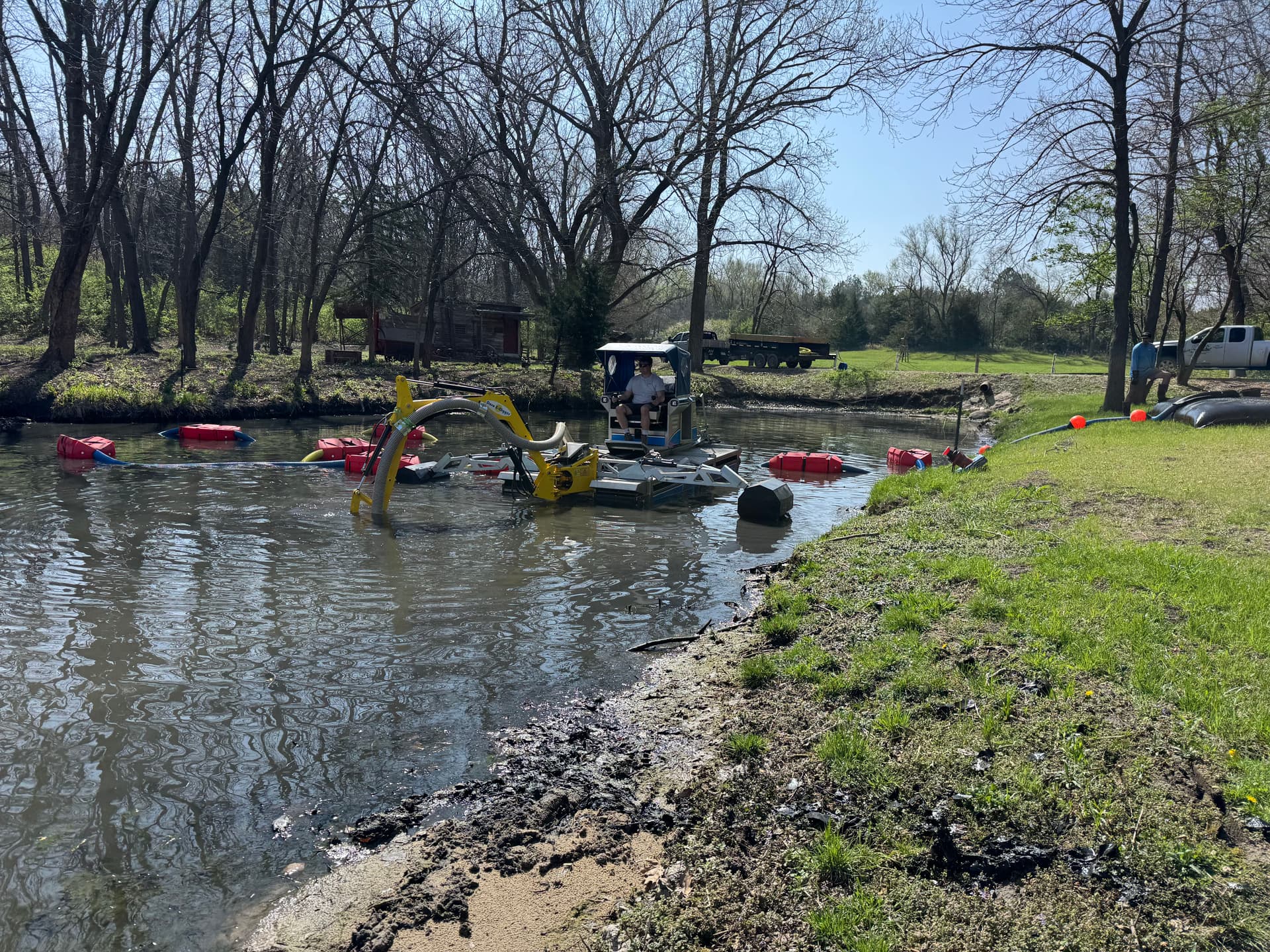
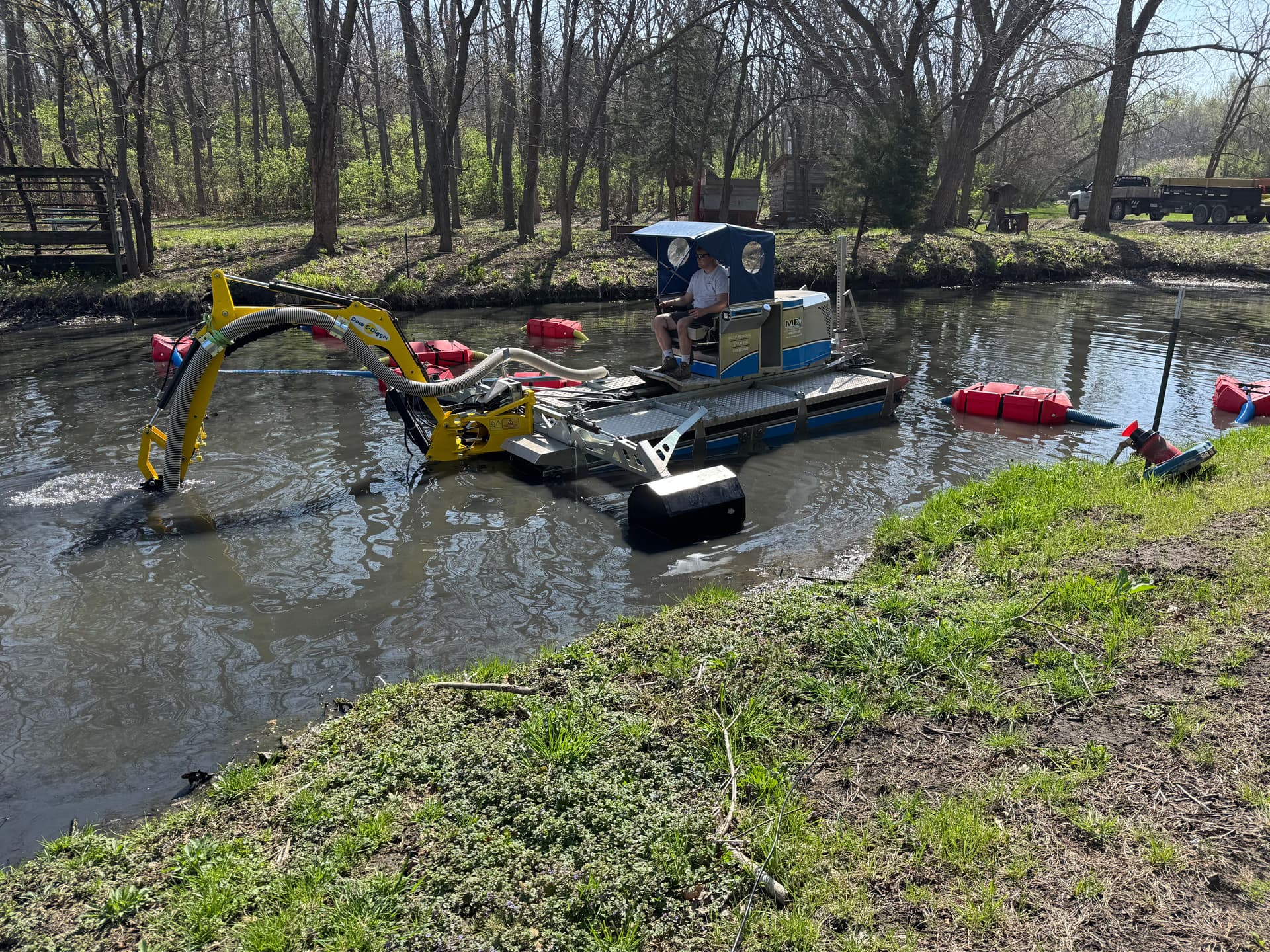
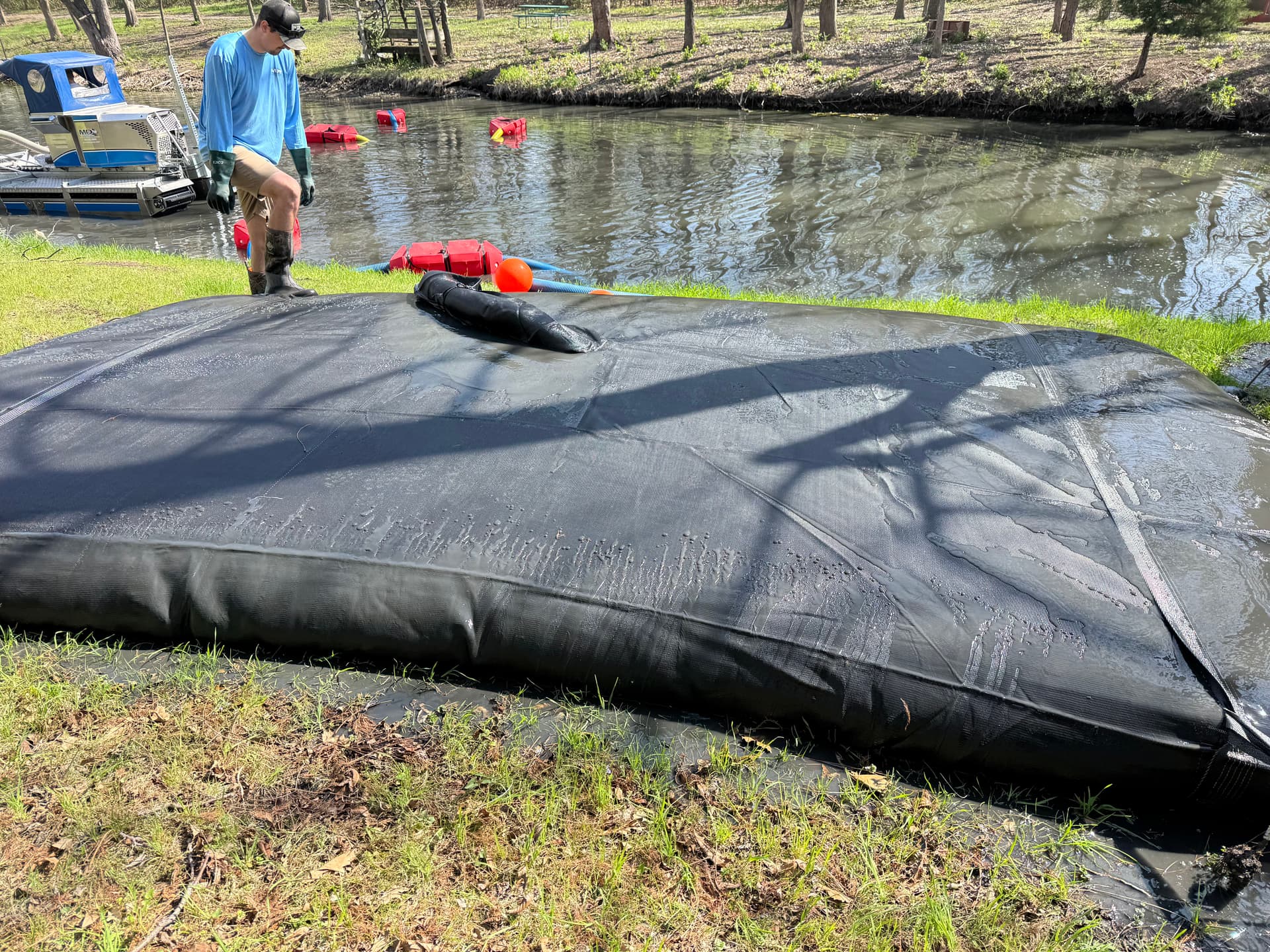
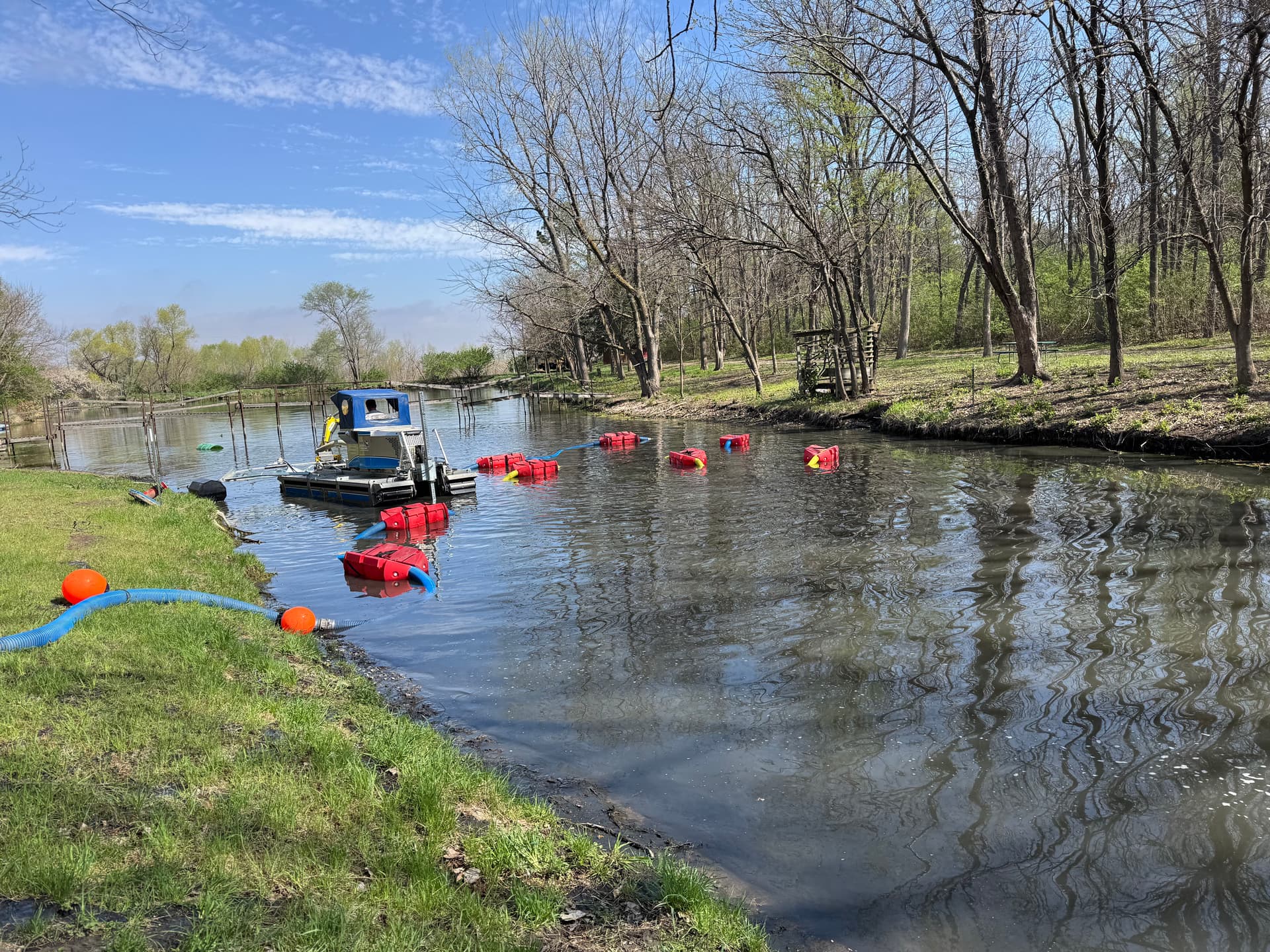
We brought in our mechanical dredging equipment to get this one cleaned out. The floating dredge platform works directly on the water, using a hydraulic arm to break up and suction out the built-up material from the pond bottom. The slurry - that mix of water and sediment - gets pumped through floating discharge lines and directed to a dewatering bag set up on the bank. That bag filters out the solids while the water drains back. Clean, contained, and no mess spread across the property.
The dewatering bag setup is something a lot of people don't think about when they picture dredging. You can't just pump mud and water wherever you want. The geotextile bag captures the sediment, lets it dry out, and keeps everything manageable. It's a critical part of doing this kind of work the right way.
What this type of pond dredging work actually does is give back depth. More depth means better water quality, better fish habitat, and a pond that looks and functions the way it should. If your pond has been getting shallower or the water quality has been going downhill, built-up sediment is usually the first thing to look at.
We work on ponds and lakes of all sizes, and no two jobs are exactly the same. If you've got a pond that needs attention - whether it's dredging, sediment removal, lake weed control, or something else - we're happy to talk through what it would take to get it back in shape.