Pond Intake Replacement Done Right in Lincoln
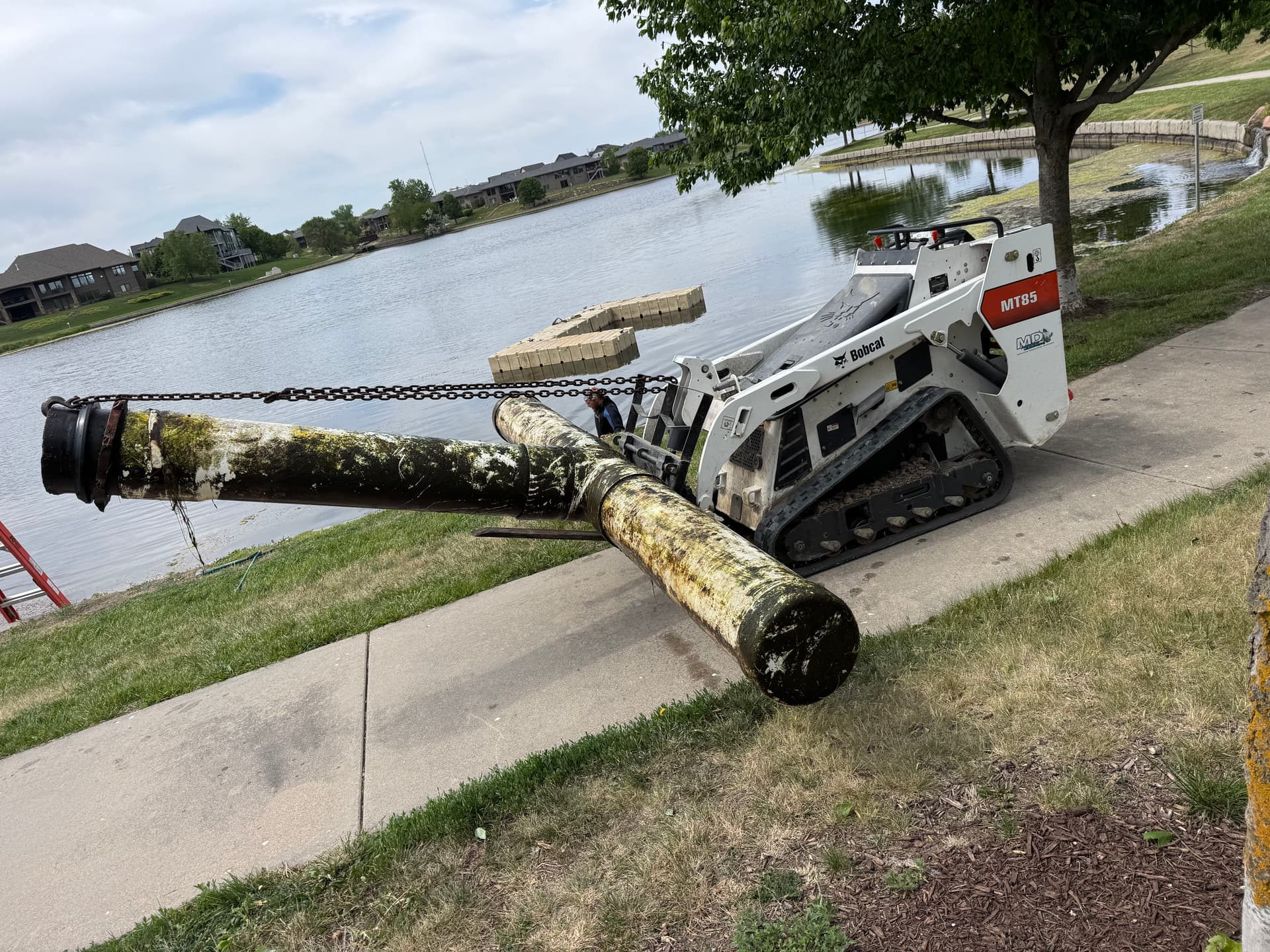
A failing pond intake might not seem like a big deal at first. But when it starts restricting flow or clogging out, it creates a chain reaction - poor water circulation, declining water quality, and eventually a pond that's harder and more expensive to manage. That's exactly the kind of problem we were dealing with on this job in Lincoln.
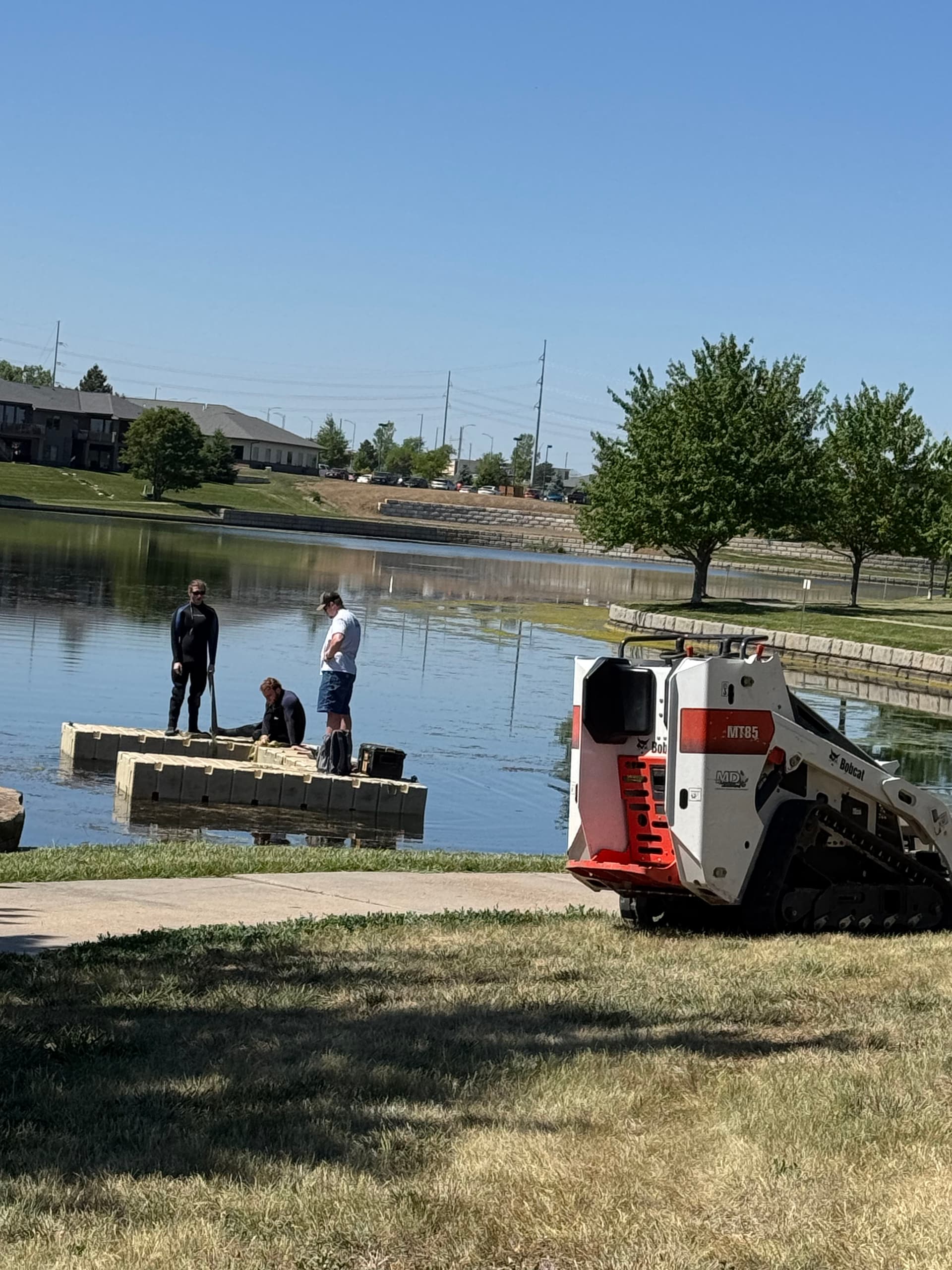
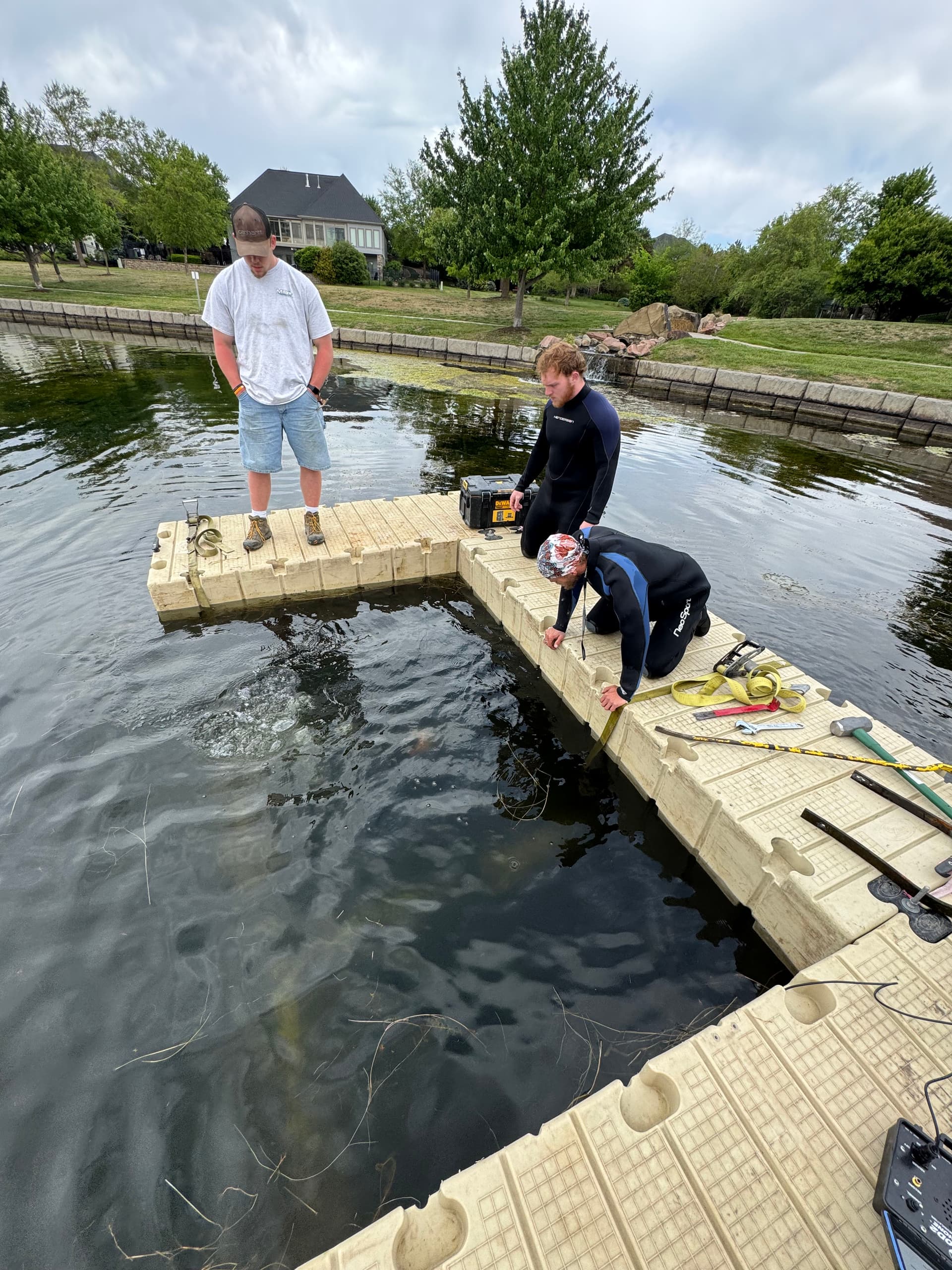
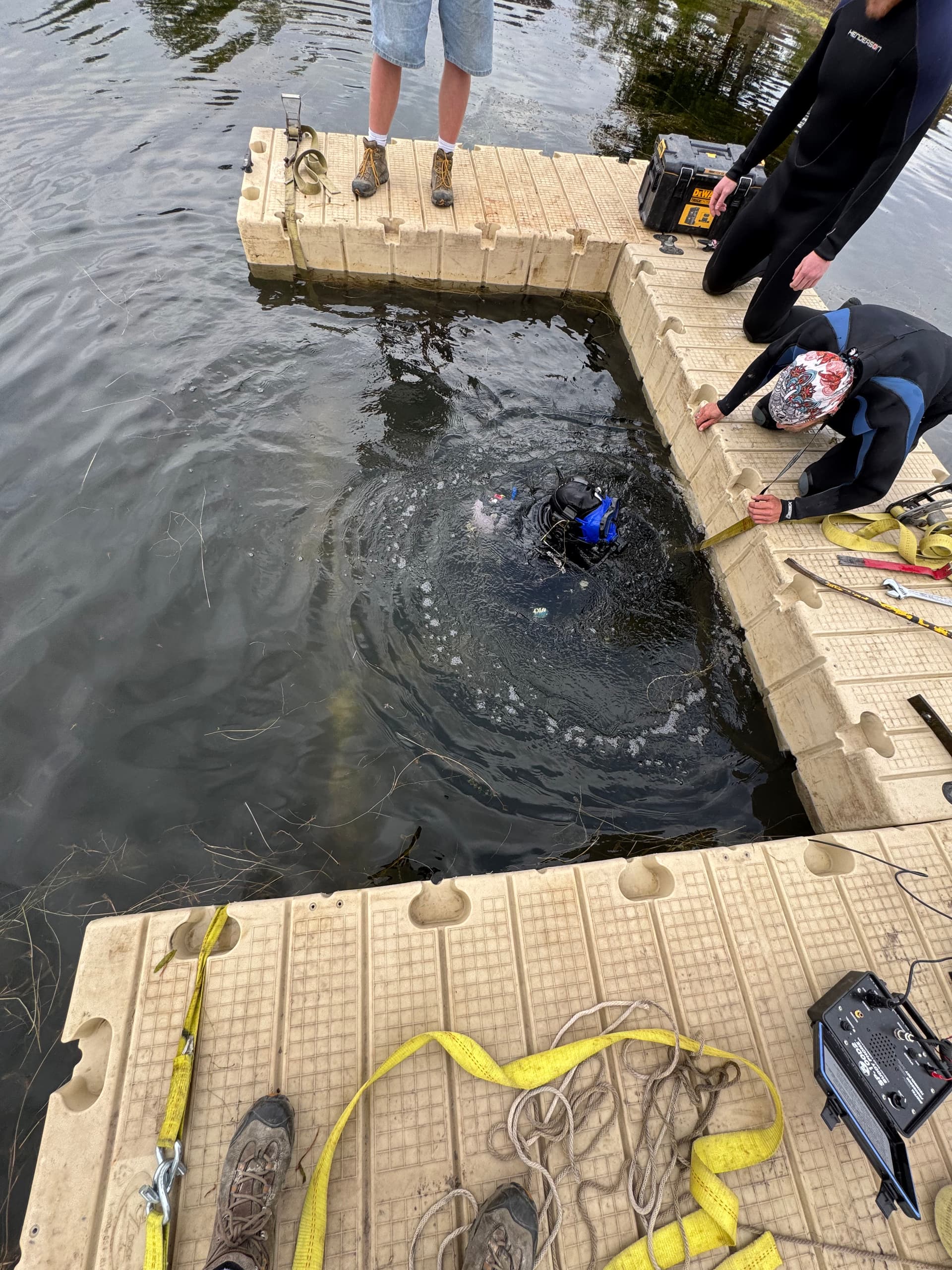
The old intake had to come out completely. You can see what years underwater does to a pipe - heavy algae buildup, corrosion, the works. We used a Bobcat MT85 to haul it out once our divers got it disconnected from below. That's the part most people don't think about - somebody has to go down there and do the actual disconnection work before anything comes to the surface. Our crew handles that in-house, working from a portable modular barge to stay positioned directly over the work area.
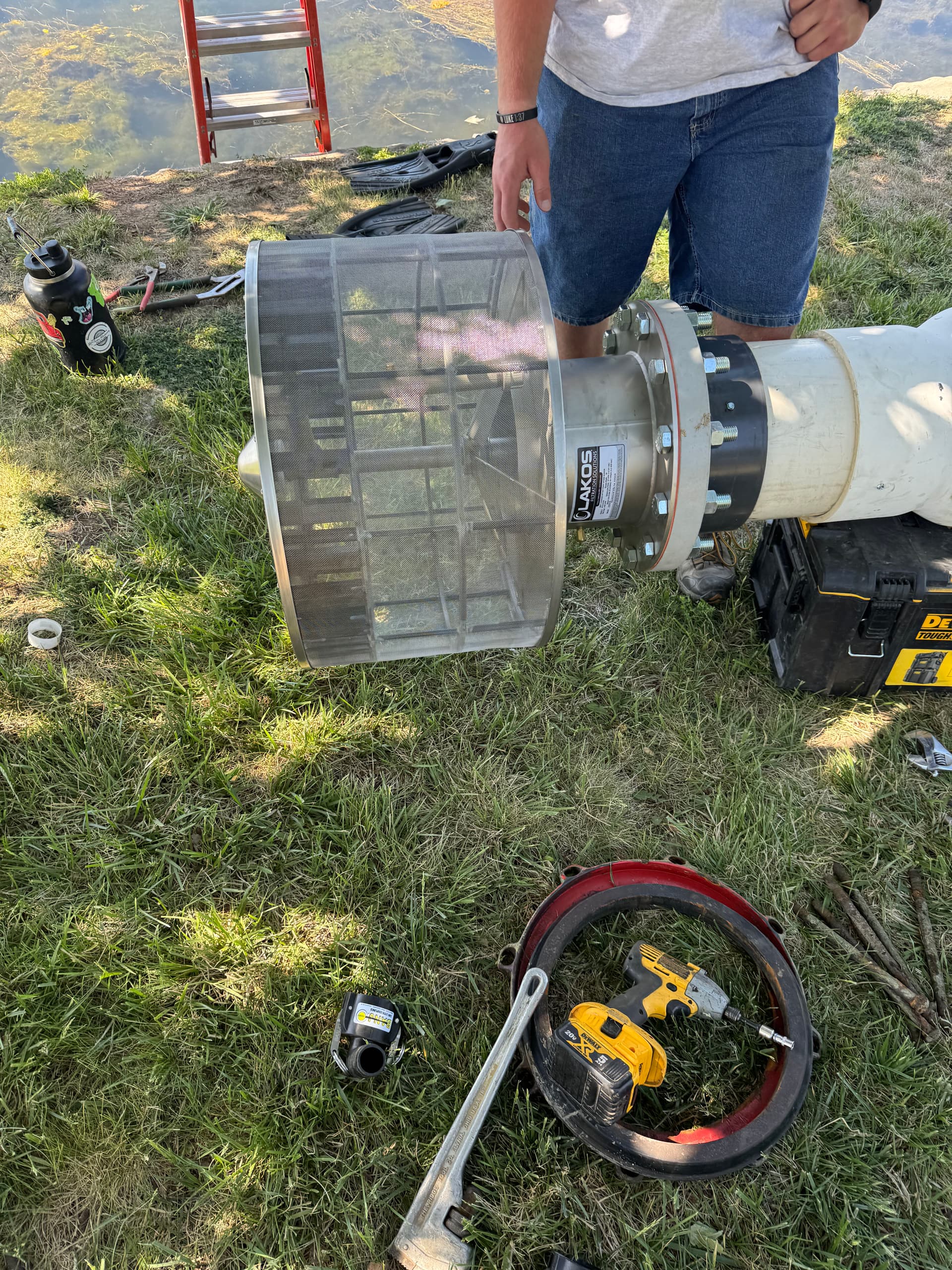
Going back in was a self-cleaning intake - a Lakos unit with a stainless steel cylindrical screen designed to resist clogging and keep flow consistent without constant manual intervention. These aren't cheap, but they're the right call for ponds that need reliable, low-maintenance performance long-term. Getting one installed correctly underwater, with proper flanged connections and sealing, is where the job gets technical.
This is the kind of work that sits right in the middle of what we do - underwater work, pond maintenance, and equipment that keeps a water system functioning the way it should. It takes divers, the right tools, and a crew that knows how to coordinate above and below the surface at the same time. We've built our operation around being able to handle all of it without bringing in outside help.
If your pond has an intake that's been giving you trouble - reduced flow, constant clogging, or one that just hasn't been touched in years - it's worth getting eyes on it before it becomes a bigger issue. We work across Nebraska and surrounding areas, and jobs like this one in Lincoln are right in our wheelhouse.